
The Uniform and the Soul
You can hang the uniform in the closet; the soul that wore it is another matter. A Scripture-grounded word for veterans learning to live as civilians.
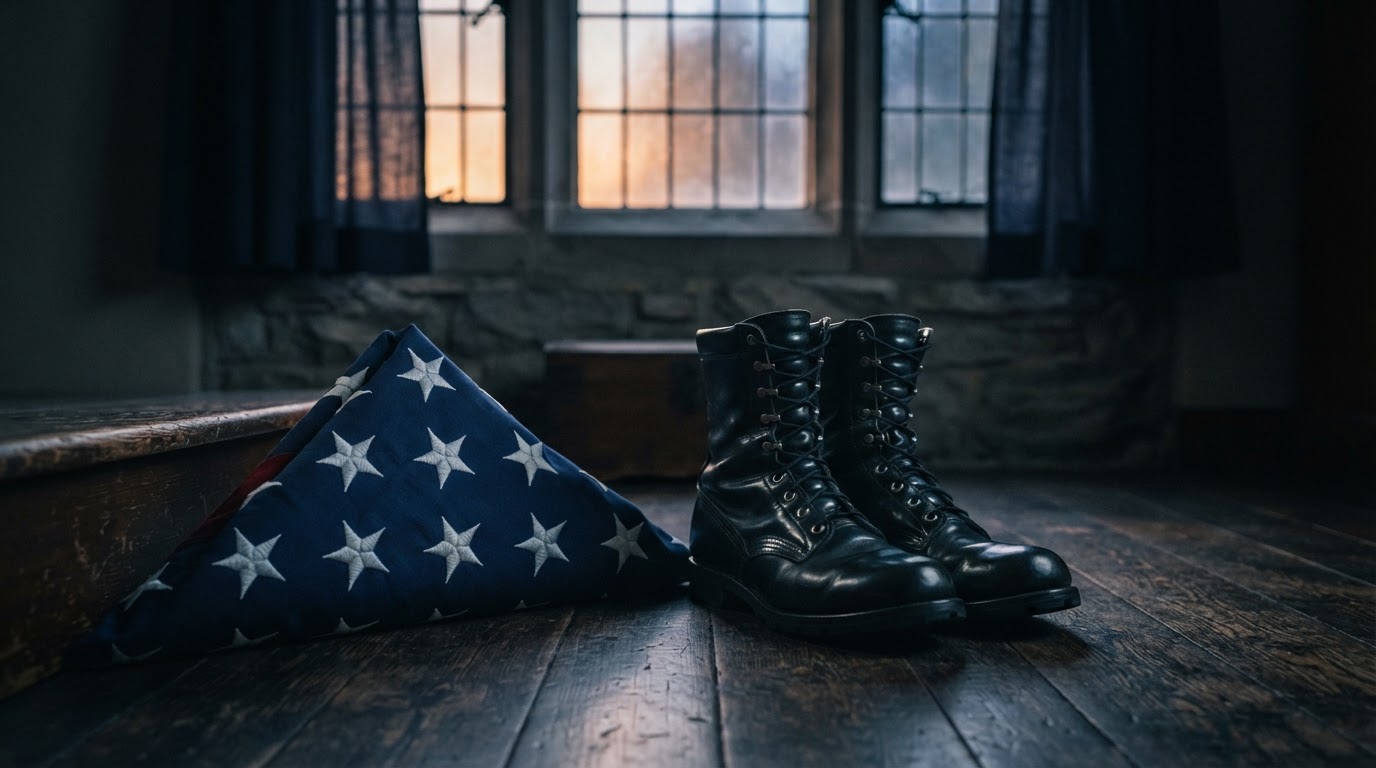
You can hang the uniform in the closet; the soul that wore it is a different matter. That is the discovery every veteran makes, and no one warns you about it before you get out. The uniform comes off, but the things the uniform did to you — the discipline, the alertness, the bond, the loss, the way your nervous system learned to live on alert — those do not fold neatly away. The transition from service to civilian life is not a paperwork process. It is a spiritual one, and the soul that served needs as much care as the body that carried it.
The first thing to say is that you are not the same person who went in, and that is not a defect. The Army — or the Navy, the Marines, the Air Force, the Coast Guard — made you, in some real ways, and it is not all good and it is not all bad. The discipline that lets you show up early, the resilience that lets you function on no sleep, the loyalty that runs deep — those are gifts. The hypervigilance that won't turn off, the difficulty connecting with people who have not seen what you have, the anger that is too quick — those are the costs. The work of the transition is keeping the gifts and addressing the costs, with the Lord and with brothers.
Scripture knows about the formation of the soul by service. David was a soldier long before he was a king, and the Psalms are full of a man whose nervous system was formed in the field. The Lord is my rock, and my fortress, and my deliverer (Psalm 18:2) — that is the language of a man who knew what it was to need a strong place in a fight. God used the soldier to write the prayer book of the Church. The formation you received in the uniform is not useless to the Lord. It is, in His hands, raw material for something He is still building.
The hardest part of coming home is that the mission is over and the meaning does not transfer automatically. In the uniform, you knew why you were here. You had a role, a unit, a purpose larger than yourself. Civilian life has no such clear structure, and the loss of it can feel like the loss of yourself. The same God who deployed you is the God who is redeploying you, and the redeployment is not a demotion — it is a new theater with new terrain, and the same skills that made you useful in the field (steadiness, leadership, willingness to lay your life down) are exactly what your family, your church, and your community need. The mission changes. The calling does not.
There is a particular loneliness in being a veteran among civilians. The people who love you do not always know what to do with what you carry, and the temptation is to stop trying to explain. The Scripture's answer is not isolation; it is the right company. Two are better than one... for if they fall, the one will lift up his fellow (Ecclesiastes 4:9-10). Part of the work of coming home is finding your people — other veterans who get it, a brother in the church who will listen, a chaplain who will not flinch. The veteran who isolates is the veteran most at risk. The soul that served was not made to carry it alone.
There is also a grief that no one warns you about — the grief of the ones who didn't come home, the grief of the version of yourself that did not survive the deployment, the grief of the time you cannot get back. The Bible does not rush that grief. It sits in it. The Lord is nigh unto them that are of a broken heart (Psalm 34:18). The God who is near to the brokenhearted is not afraid of what you carry, and the work of the transition is, in large part, the work of bringing that grief to Him instead of numbing it.
Lament is the veteran's prayer. The Bible is full of men who brought their pain to the Lord without polishing it first — David in the psalms, Jeremiah in the laments, even Christ in Gethsemane (Luke 22:42). The veteran who learns to pray honestly — not the performance, the real thing — is the veteran who heals. My soul is cast down within me (Psalm 42:5) is a prayer. Why art thou cast down, O my soul? is a prayer. The answer is hope in God, and the hope comes after the honesty, not before. Bring Him the unfiltered version. He served too.
The uniform comes off. The man remains. And the man, formed by service and reformed by grace, is exactly the man the Church and the community need. This is not the end of your usefulness. It is the beginning of a different usefulness — slower, quieter, longer, and in many ways harder, because it is not measured in missions completed but in lives steady over time. Be thou faithful unto death, and I will give thee a crown of life (Revelation 2:10). The faithfulness continues. The theater changes. The Commander does not.
If you are a veteran working through the transition, you do not have to do it alone, and you do not have to pretend it is easy. I served, and I would consider it an honor to walk with you. I serve Columbus, Georgia and the surrounding area. Call or text (706) 577-1328, or email lewis.otis@ymail.com. The uniform is in the closet. The soul is still in His hands.
People · Purpose · Potential
Connect with Mr. Lewis
However you need to reach out — to book a speaker, request a chaplain visit, join a Bible study, or ask for prayer — there is a door open here. Serving Columbus, GA and surrounding areas throughout Georgia.