
Spiritual Resilience for Veterans and First Responders
The people who run toward the trouble carry what they see. A Scripture-grounded look at the resilience that holds when the shift is over.
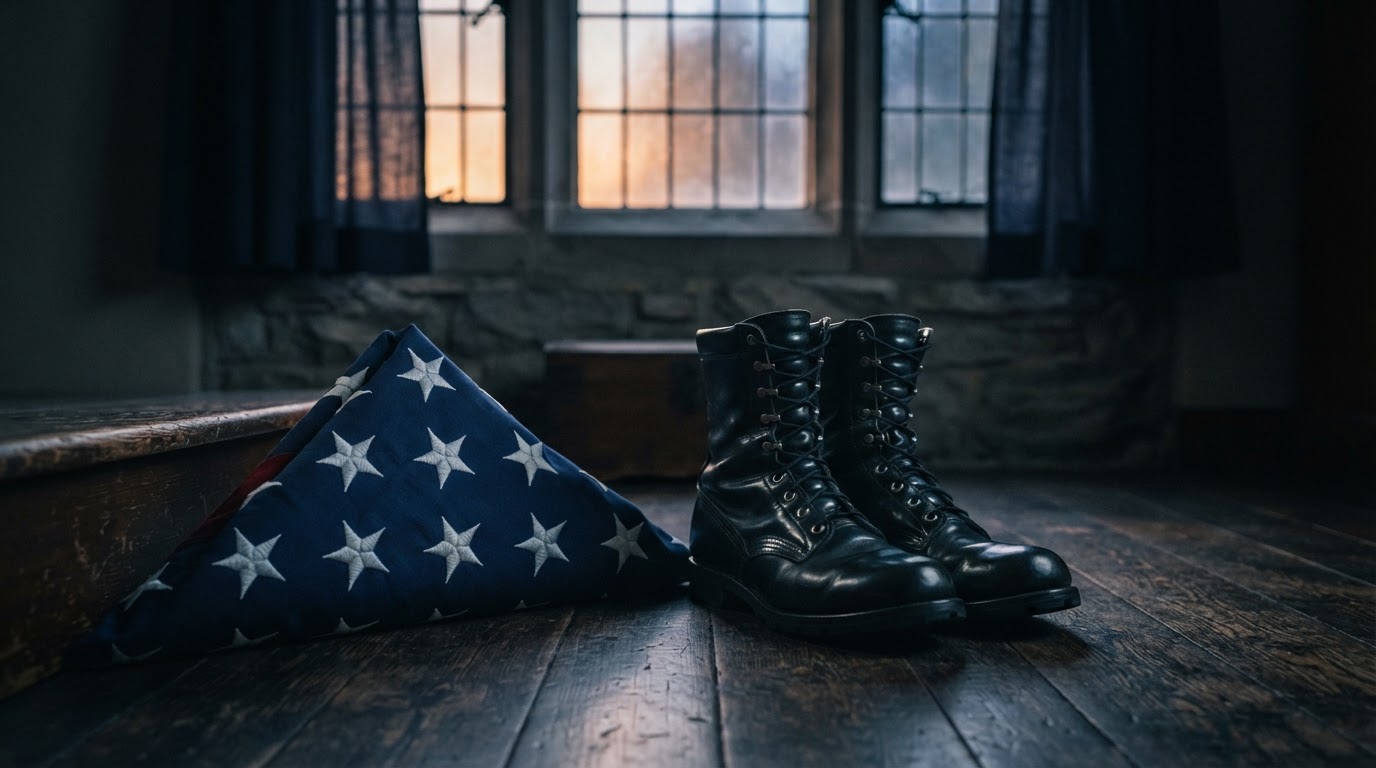
There is a particular weight that comes with being the one who runs toward the trouble. The veteran and the first responder live closer to the brokenness of the world than most people ever will, and the cost is not just physical. It is the things you have seen, the things you cannot unsee, the calls you replay at 3 a.m., the friends who didn't come home. The world thanks you for your service and then moves on, and you go back to a life that doesn't quite know what to do with what you carry. Spiritual resilience is the work of not letting that weight become your whole identity.
Let me say it plainly because it needs saying: resilience is not toughness, and it is not the absence of struggle. The resilient veteran is not the one who never flinches. He is the one who flinches and is still standing twenty years later. The Bible knows this distinction. The psalms are full of people under crushing pressure who did not pretend to be fine — I am weary with my groaning; all the night make I my bed to swim; I water my couch with my tears (Psalm 6:6) — and those same people are remembered as giants of faith. Faithfulness under pressure is not stoicism. It is honest anguish held inside a trust that does not break.
The first move of spiritual resilience is honesty before God. You cannot heal what you will not name. David did not come to God with a polished report; he came with the raw version. Why art thou cast down, O my soul? and why art thou disquieted in me? (Psalm 42:5). He asked the question and then he answered it: hope thou in God. But notice — he asked the question first. He gave the despair a hearing. Resilience begins when you stop performing strength for an audience and start telling the Lord the truth. He can handle the unfiltered version. He already knows it.
The second move is letting other people in. This is where it gets hard, because the work trains you to be the strong one and to carry it alone. The uniform teaches self-reliance, and self-reliance is a gift until it becomes a prison. The Bible's model is the opposite. Two are better than one; because they have a good reward for their labour. For if they fall, the one will lift up his fellow (Ecclesiastes 4:9-10). The veteran who isolates is the veteran most at risk. Spiritual resilience is a team sport, and part of resilience is the humility to say, I am not okay, and I need my brothers. Bear ye one another's burdens (Galatians 6:2) — burdens, plural, shared.
There is a spiritual dimension to what you carry that clinical care alone will not reach. The therapist can help you process the trauma; the chaplain can help you place it. Not everything you saw is just a memory. Some of it is a question — Where was God? — and that question has to be answered or it will fester. The Scripture does not give pat answers to the problem of suffering, but it does give a Person who entered it. A man of sorrows, and acquainted with grief (Isaiah 53:3). Christ did not stay above the suffering; He came down into it. The God you served is not surprised by the darkness you walked through. He walked through His own.
Lament is a discipline the church has largely forgotten and the veteran desperately needs. Lament is not complaining, and it is not unbelief — it is the prayer of someone who trusts God enough to tell Him when it hurts. How long, O Lord? is the most honest prayer in the Bible (Psalm 13:1). The resilient soul does not skip lament to get to praise. It laments until the lament becomes praise, because the same God who receives the complaint is the God who will answer it. Give yourself permission to grieve what you saw. Grief that is offered to God is not weakness. It is worship.
Reframe the mission, because the old one is over. The veteran's deepest crisis is often the loss of purpose that comes when the mission ends and civilian life has no clear role for the skills you earned in uniform. The same God who deployed you is the God who is redeploying you, and the redeployment is not a demotion — it is a new theater with new terrain. The things the service built in you — discipline, steadiness under pressure, the ability to lead and to follow, the willingness to lay your life down for others — are exactly the things your family, your church, and your community need. The skills are transferable. The calling is continuous.
Take care of the body too, because it is part of the spirit's address. The Lord cares about your sleep, your rest, your nervous system that has been running on alert for years. Come unto me, all ye that labour and are heavy laden, and I will give you rest (Matthew 11:28) — rest is not weakness; it is an invitation from the Lord. The resilient veteran is the one who learns to stand down when there is no threat, to let his shoulders drop, to breathe. The body that spent years braced for impact has to be taught, slowly, that it is allowed to be at rest. That is spiritual work, and it is holy work.
If you are carrying weight from service — military or first responder — and you need someone who will not flinch, I am here. I served, and I understand at least some of what you carry. I serve Columbus, Georgia and the surrounding area, and I will come to you, your station, your home, wherever you are. Call or text (706) 577-1328, or email lewis.otis@ymail.com. The shift may be over. The weight doesn't have to stay unspoken. There is rest, and there is a Father who is not surprised by the dark. Let's talk.
People · Purpose · Potential
Connect with Mr. Lewis
However you need to reach out — to book a speaker, request a chaplain visit, join a Bible study, or ask for prayer — there is a door open here. Serving Columbus, GA and surrounding areas throughout Georgia.